Canon Content Creation Solutions

Your Complete Guide to Finding the Right Canon Camera

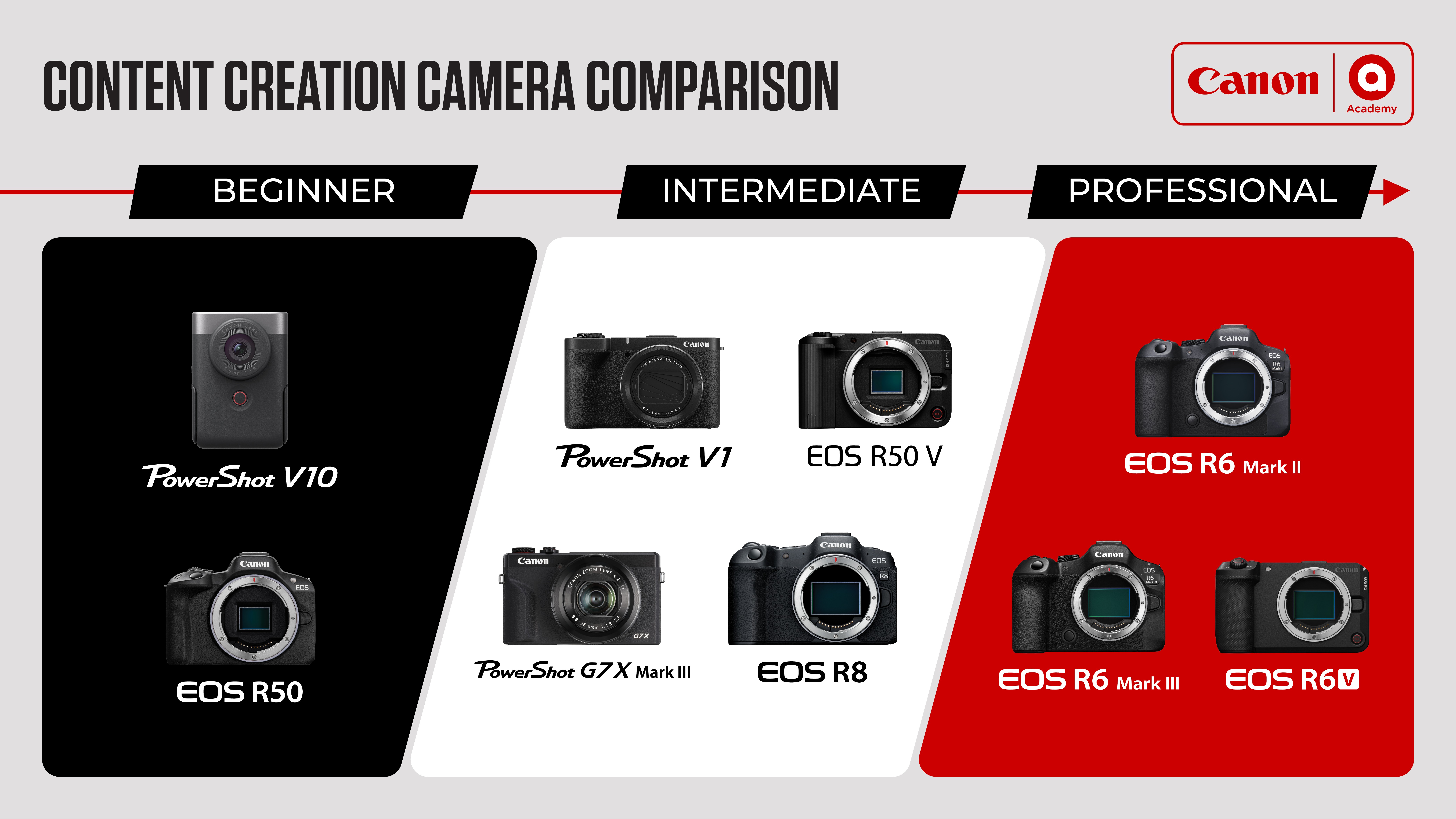
Every creator starts somewhere. Some are building their first YouTube channel. Others are deep into branded content, live streaming, or multi-platform social production. Canon has a camera for each of those stages, and this guide covers all nine of them.

The Canon content creation lineup runs from the pocketable PowerShot V10 all the way to the EOS R6 V, a full-frame video-first body with 7K RAW recording. Each camera in between is a deliberate step in resolution, control, and creative capability.

Read through from the beginning, or jump to the section that matches where you are right now.

1. CANON POWERSHOT V10

Powershot-v10-image

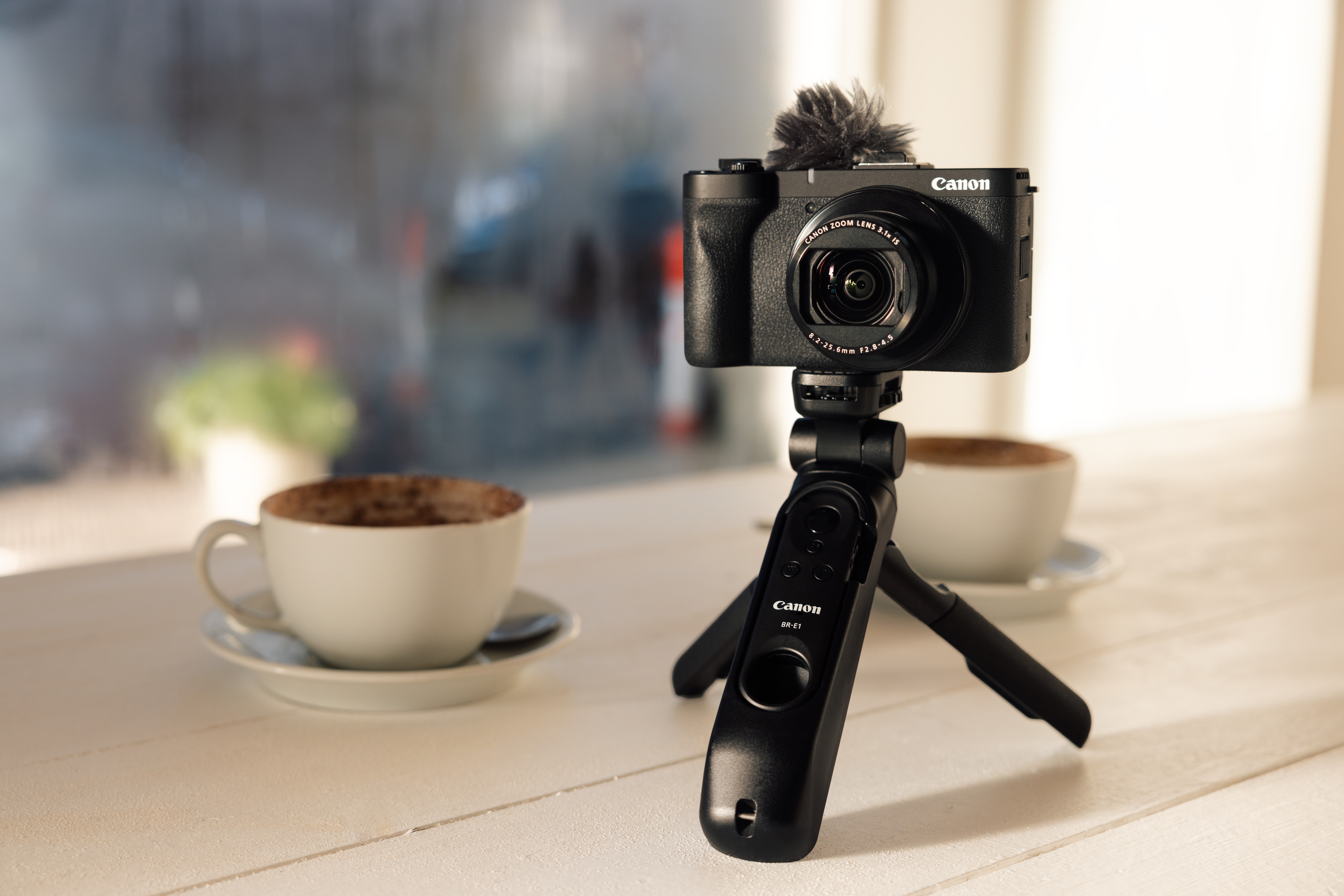
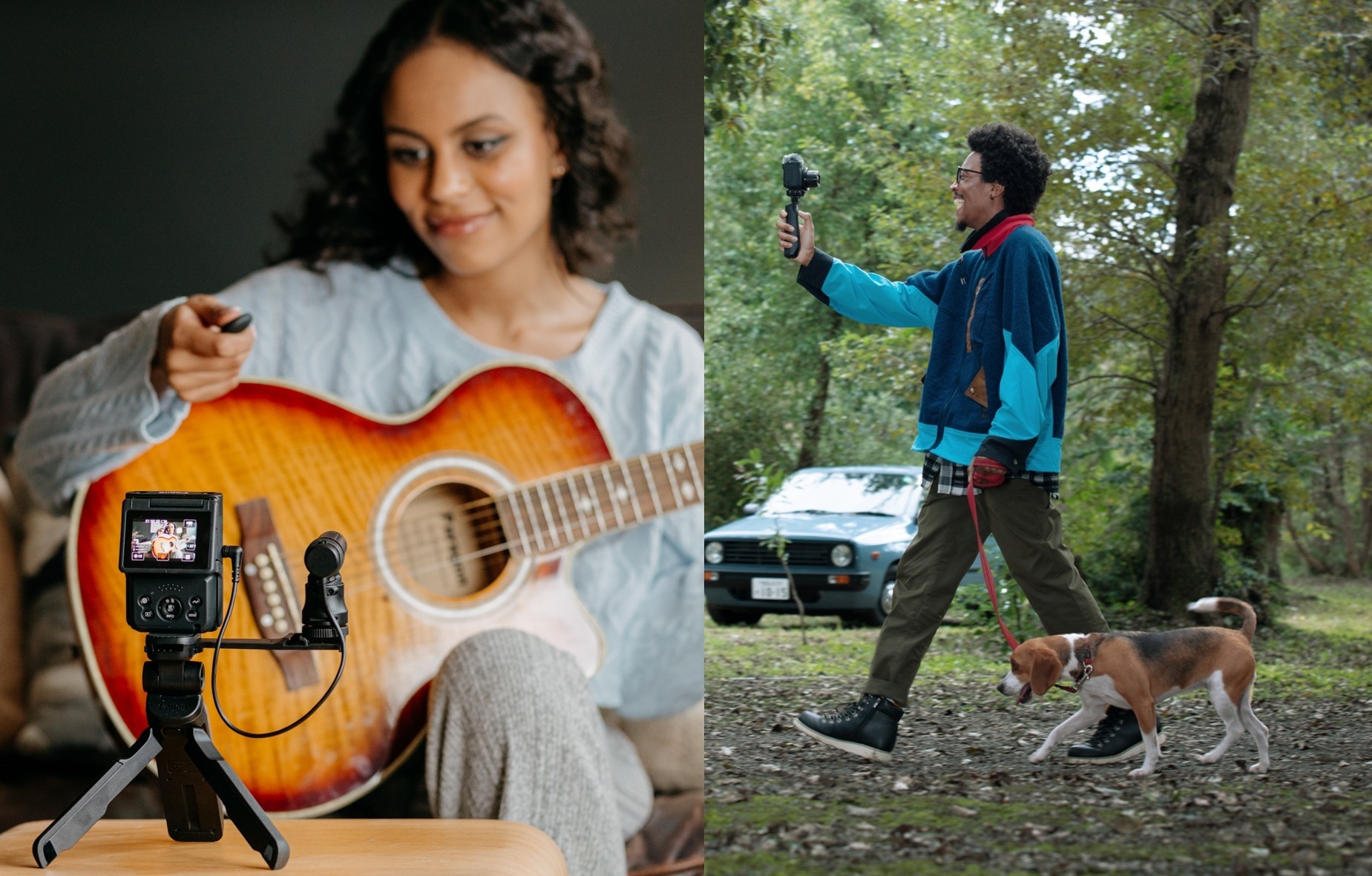
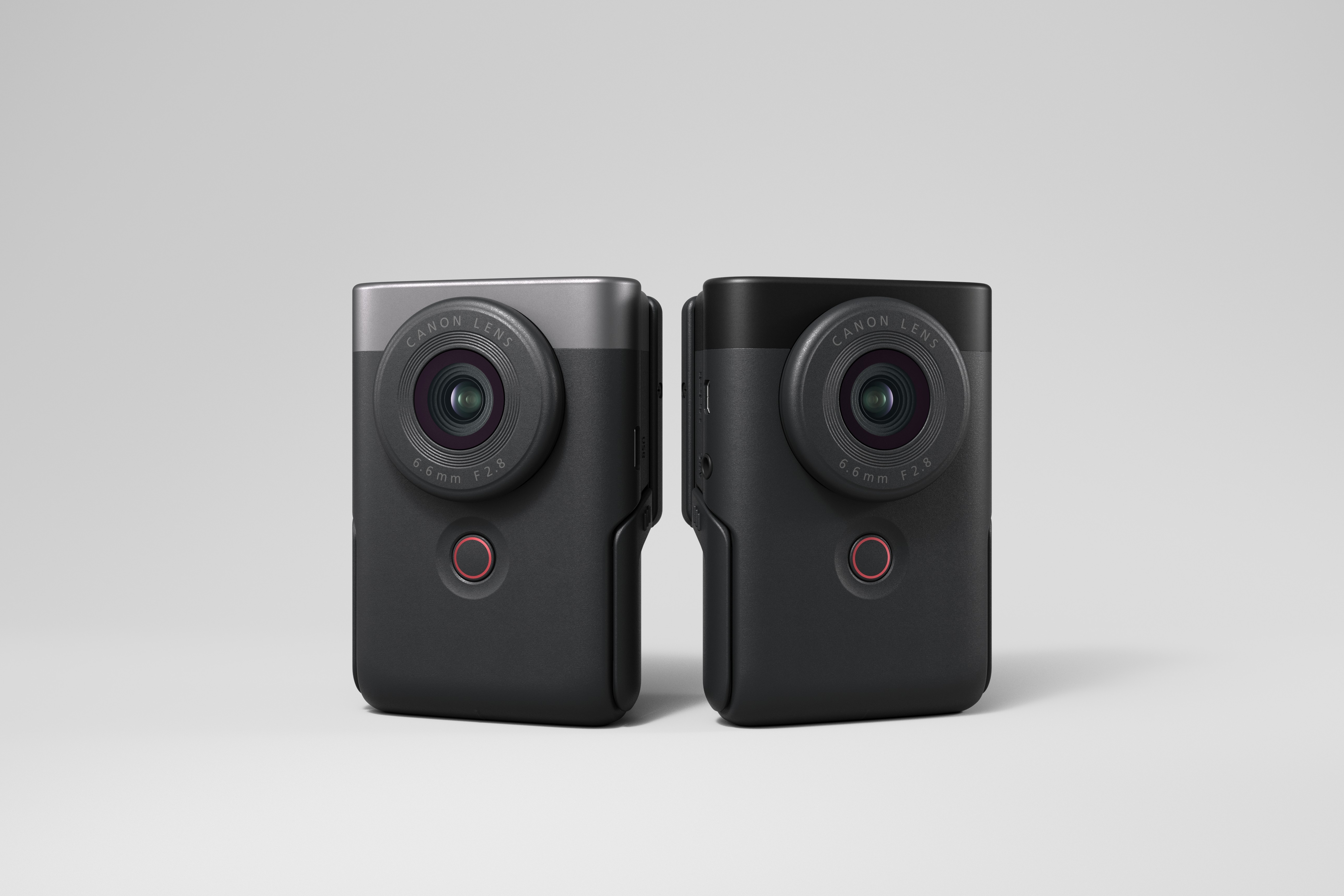
The PowerShot V10 is built for one purpose: getting you on camera, instantly, anywhere. It was designed from the ground up as a dedicated vlogging device, not a traditional camera with video features added on. It fits in your pocket and deploys in seconds.

At the heart of the V10 is a 1-inch back-illuminated CMOS sensor, the same sensor technology used in Canon's popular G-Series cameras, delivering solid image quality even in low light. A fixed 19mm f/2.8 wide-angle lens keeps you and your surroundings in frame without awkward arm extensions.

Its most distinctive feature is the built-in adjustable stand, which tilts up to 30 degrees forward or backward. Any flat surface becomes a hands-free setup. Combined with a high-quality built-in stereo microphone and a 3.5mm external microphone input, the V10 is a studio that fits in a jacket pocket.

Best For: Beginner vloggers, daily content creators, short-form social media creators, and anyone stepping up from a smartphone who wants professional-looking results without the complexity of a traditional camera system.

2. CANON POWERSHOT V1

Powershot_V1_Ambient_Image

The PowerShot V1 takes everything the V10 does and builds significantly on it for creators ready to go further. Launched in 2025, the V1 houses a newly designed 1.4-inch CMOS sensor, approximately twice the surface area of a standard 1-inch sensor, inside a body that still fits in a jacket pocket.

The V1 is built around the idea of unlimited creativity. Its built-in cooling fan prevents overheating, enabling continuous 4K 60p recording for as long as the shoot demands. Canon's Dual Pixel CMOS AF II autofocus, inherited from the EOS R6 Mark II, locks onto faces, eyes, and bodies with real speed and accuracy even during fast movement.

Canon Log 3 with 10-bit colour depth opens up professional-grade colour grading in post. Movie Close-Up Mode shifts focus automatically to products brought close to the lens, which makes it a natural choice for unboxing content and product demos.

Best For: Intermediate to advanced content creators, travel vloggers, live streamers, and creators producing content for YouTube, Instagram, and TikTok who need a portable but capable tool.

3. CANON POWERSHOT G7X MARK III

POWERSHOT_G7X_MARKIII_VLOGGING_AMBIENT

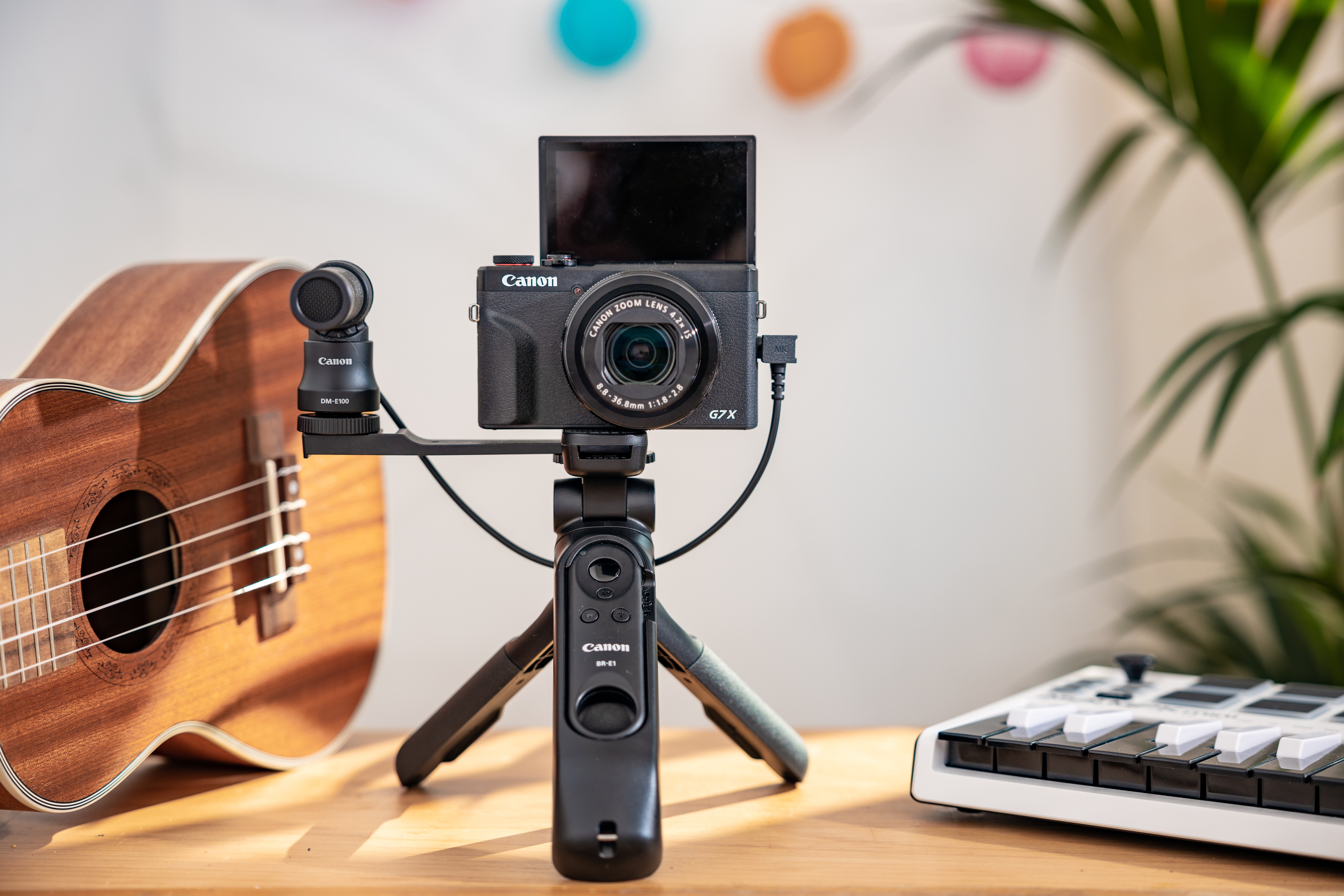
Few cameras have earned the cultural footprint of the G7 X Mark III. Since its launch it became the default camera for a generation of YouTubers, travel vloggers, and social media creators, because it combines a 1-inch stacked CMOS sensor with a versatile 8.8–36.8mm zoom lens (35mm equivalent: 24–100mm, f/1.8–2.8) in a slim, pocketable body.

The G7 X Mark III was one of the first compact cameras to offer direct YouTube live streaming, a feature that made it an instant favourite with spontaneous creators. Its 4K 30p uncropped recording and 180-degree tilting touchscreen make it a capable all-rounder that still earns its place in the lineup.

The f/1.8 maximum aperture at the wide end is outstanding for low light, producing clean subject separation and blurred backgrounds that lift the production value of any content. The 2026 Anniversary Edition marks that heritage with a limited graphite body and twill-pattern front ring.

Best For: Social media influencers, YouTube vloggers, travel creators, and photographers who want a compact, versatile camera with outstanding low-light performance.

4. CANON EOS R50

_EOS R50_Ambient_High-Angle_Black_Camera_Food_Setup

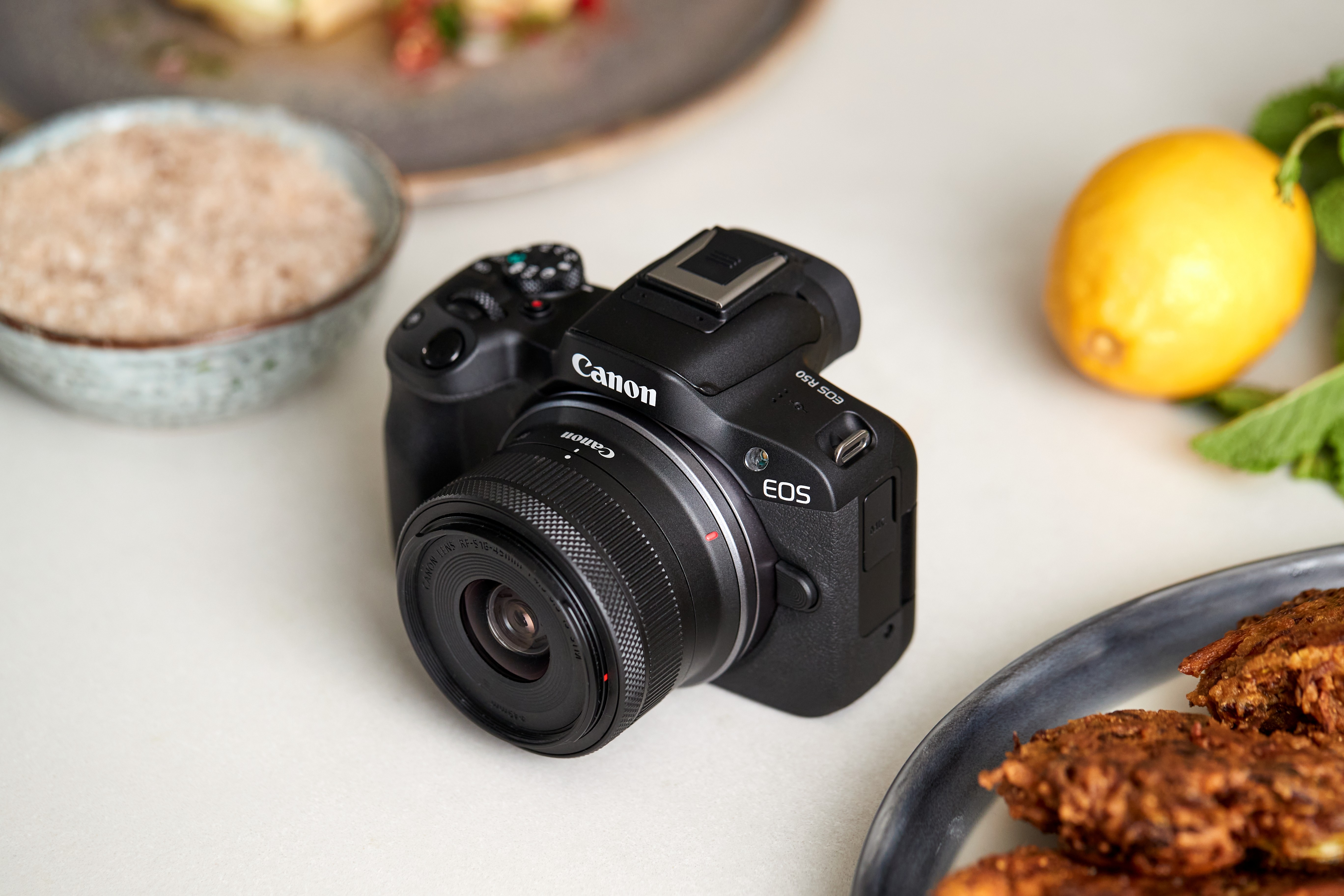
The EOS R50 is the first step into Canon's EOS mirrorless system for content creators. As an APS-C mirrorless camera, it offers interchangeable lens flexibility while staying compact and approachable. It's the right camera for creators who have outgrown a fixed-lens compact.

A 24.2MP APS-C CMOS sensor and Canon's Dual Pixel CMOS AF II system deliver sharp imagery with intelligent subject tracking. The fully articulating touchscreen makes selfie-style vlogging straightforward, while 4K 30p video recording and Full HD 120p slow motion give creators real creative options to work with.

Compatibility with Canon's growing RF and RF-S lens ecosystem means the creative options expand as the skills and budget do. Start with one lens. Add more as the work demands it.

Best For: Beginner to intermediate content creators stepping into the mirrorless world, photographers who also shoot video, and anyone who wants the flexibility of an interchangeable lens system in a compact, creator-friendly body.

5. CANON EOS R50 V

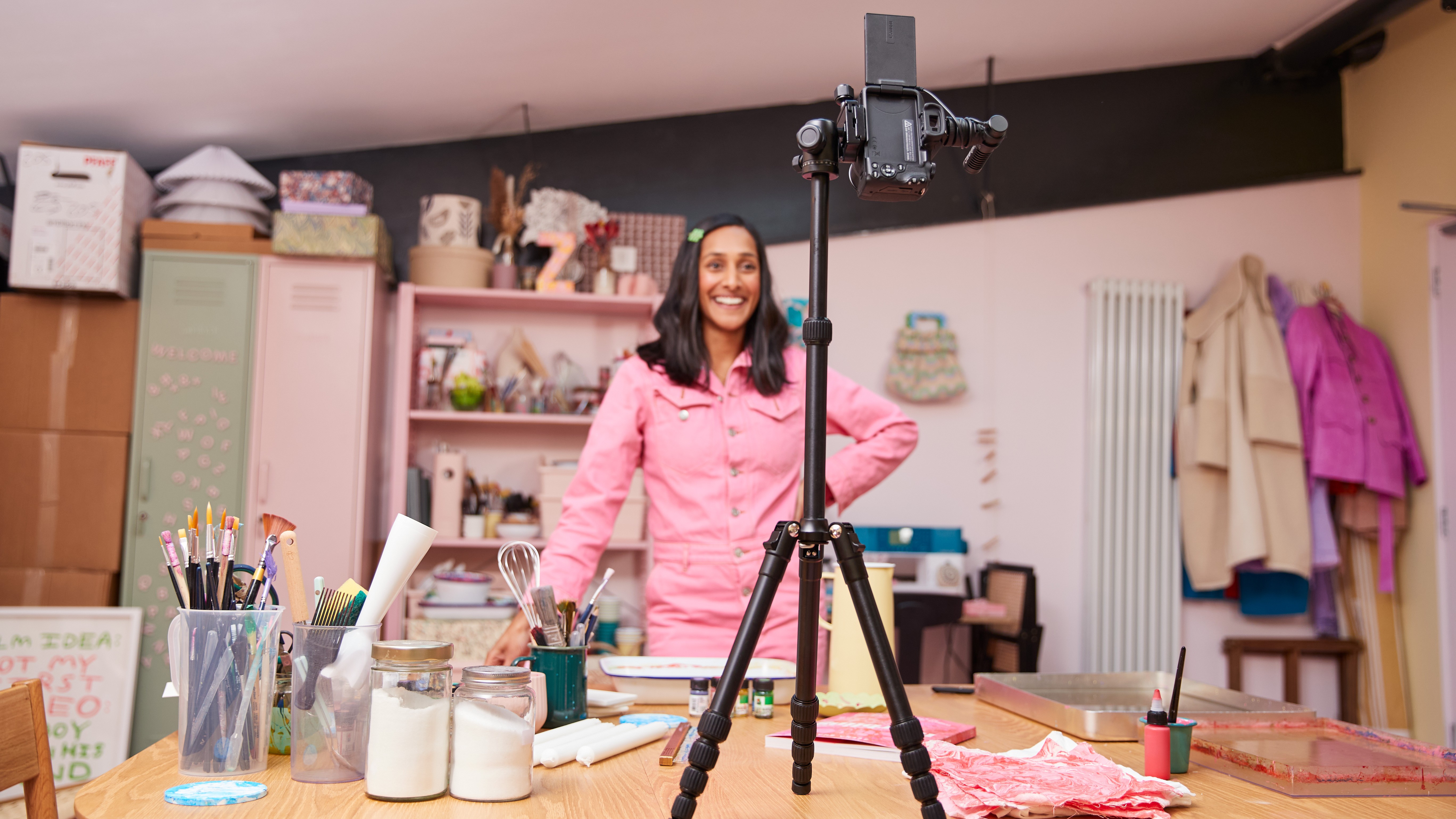
EOS R50 V_Ambient_Camera_Remote_Tripod_Microphone

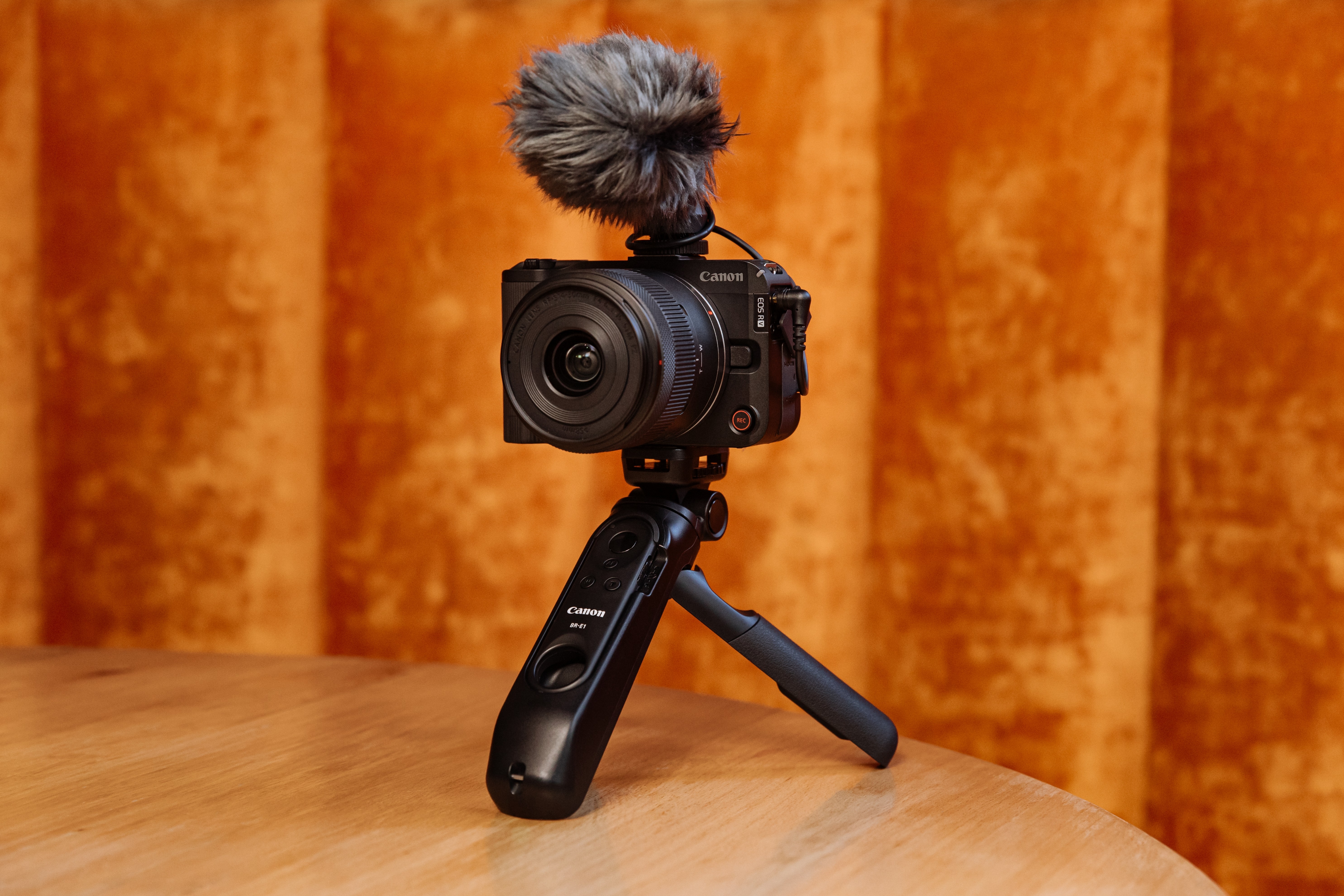
The EOS R50 V builds on the R50's foundation but is redesigned for video-first creators. Announced in early 2025 as part of Canon's expanding V Series, it inherits features from the Cinema EOS line and packages them into an accessible, affordable mirrorless body.

Its vertical tripod mount is one of the most practical additions to a creator camera in years. It records 4K at up to 60p, with full-width 6K oversampling available at 30p for maximum sharpness. Canon Log 3, a redesigned layout with front and top record buttons, and the DIGIC X processor give the R50 V a professional-grade feel at an accessible price.

For creators who live on Reels, TikTok, and YouTube Shorts, this camera was built around your workflow.

Best For: Video-first creators, social media content producers, and vloggers who need a camera built around a video-centric workflow.

6. CANON EOS R8

EOS R8_Ambient

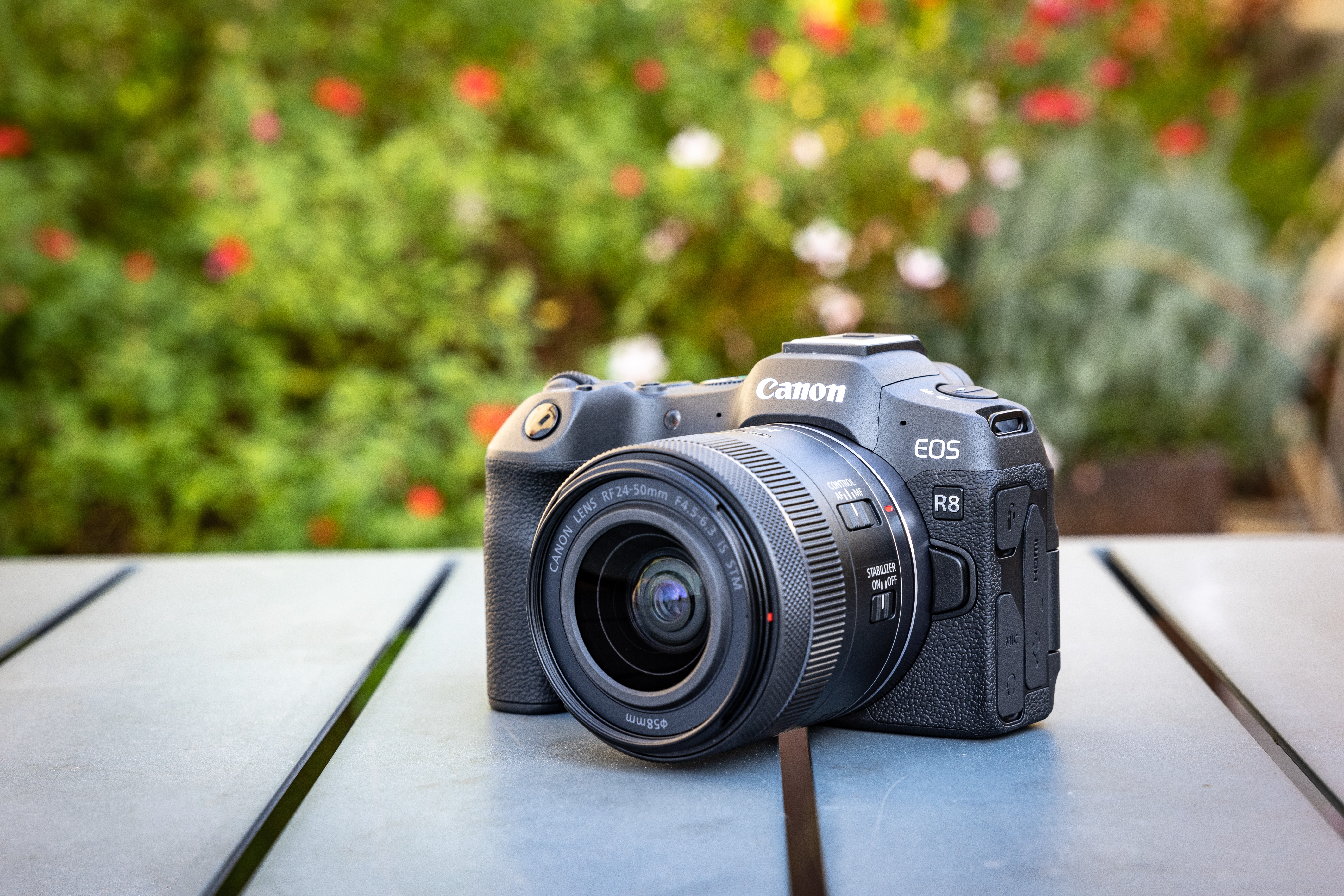
The EOS R8 answers the question many creators reach at some point: what would it take to have a full-frame sensor without the weight and cost of a professional body? The answer is a camera weighing under 415g that shares the same 24.2MP sensor and DIGIC X processor as the EOS R6 Mark II.

For video, the R8 records uncropped 4K at up to 60fps, oversampled from 6K for outstanding sharpness. Canon Log 3 and HDR PQ provide 10-bit colour recording, and a pre-recording mode captures three to five seconds of footage before the record button is pressed. Full HD at up to 180fps gives you proper slow-motion capability.

The trade-off versus the R6 Mark II is the absence of in-body image stabilisation. For creators shooting with stabilised RF lenses or using a gimbal, that's rarely a limiting factor, and it's the primary reason the R8 stays compact and affordable.

Best For: Photographers and creators making the move to full-frame for the first time, travel creators who need full-frame image quality in the lightest possible package, and anyone wanting the R6 Mark II's imaging performance at a more accessible price.

7. CANON EOS R6 MARK II

Eos_R6_Mark_II_Image

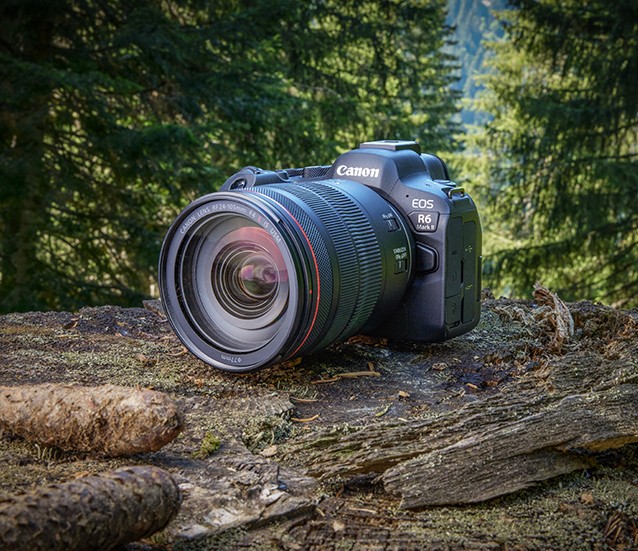
The EOS R6 Mark II is one of Canon's best-selling full-frame mirrorless cameras, and it holds that position for good reason. It balances high-performance stills and professional-grade video in a weather-sealed body, making it the camera of choice for hybrid creators who need to deliver across multiple disciplines.

A 24.2MP full-frame CMOS sensor captures outstanding detail, dynamic range, and low-light performance. The 4K 60p video recording, 8-stop in-body image stabilisation, and Dual Pixel CMOS AF II make it equally strong as a video platform.

Weather sealing, dual memory card slots, professional audio connections (microphone and headphone jacks), and the full Canon RF lens ecosystem make the R6 Mark II a camera built to grow with a professional workflow for years.

Best For: Professional photographers and videographers, hybrid creators, commercial and branded content producers, event and documentary filmmakers, and anyone who demands full-frame image quality and professional reliability.

8. CANON EOS R6 MARK III

EOS R6 Mark III_Ambient

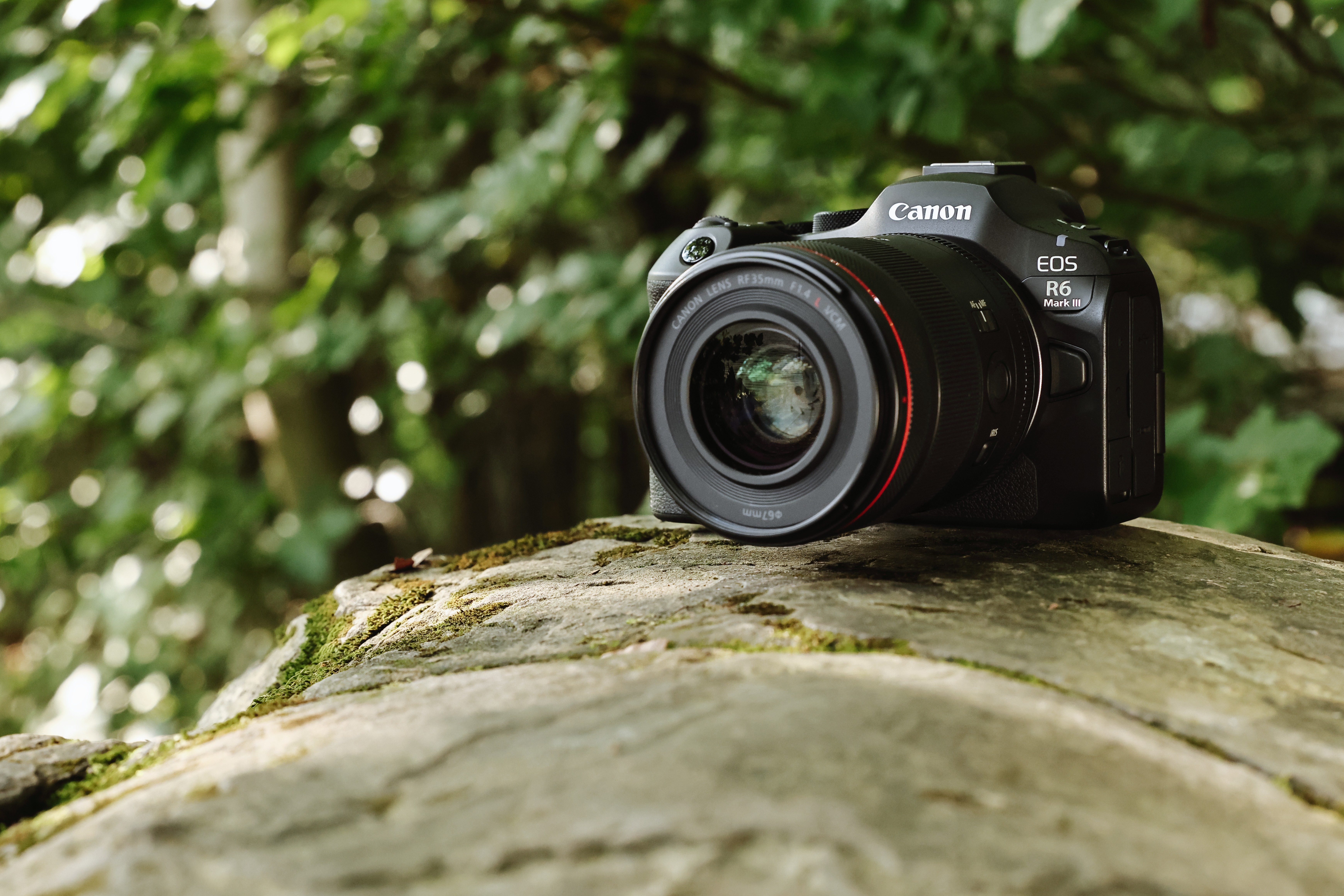
The EOS R6 Mark III is a well-balanced model in Canon's hybrid mirrorless lineup for photographers and creators who do both. It brings a 32.5MP full-frame sensor, borrowed from the Cinema EOS C50, that enables internal 7K RAW recording at up to 60p.

Open Gate recording at 7K 30p captures the full 3:2 sensor area, giving post-production the flexibility to reframe the same clip into landscape, vertical, and square formats without quality loss. The upgraded Dual Pixel CMOS AF II system, inherited from the EOS R1, tracks subjects down to -6.5EV.

With 40fps stills, 20-frame pre-continuous capture, and CFexpress Type B plus UHS-II SD dual card slots, this is a camera built to be pushed hard, every day.

Best For: Advanced professional creators, filmmakers, commercial producers, and hybrid shooters who demand the best in image quality, video capability, and creative flexibility from a single body.

9. CANON EOS R6 V

Canon_EOS_R6_V_Image

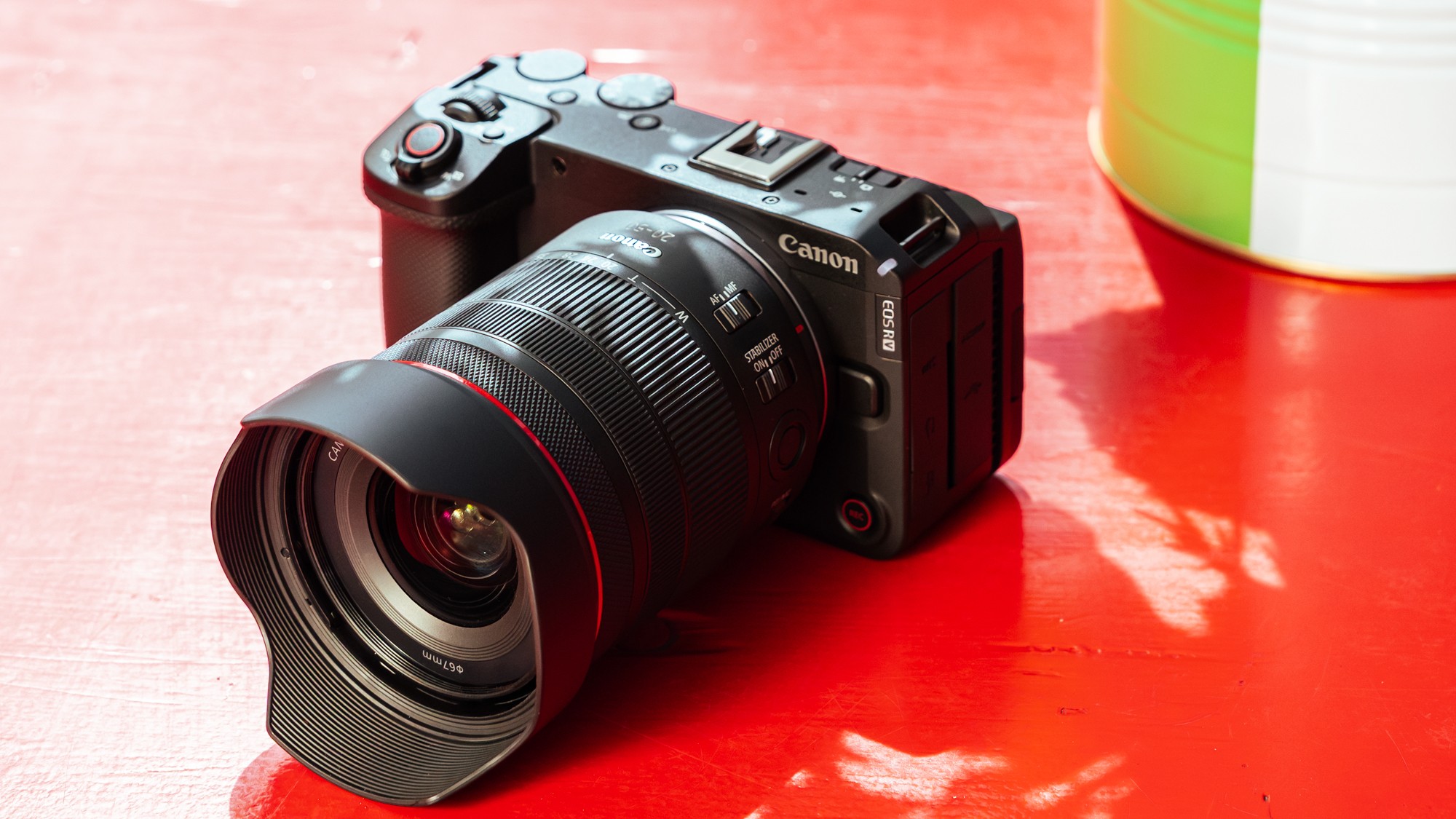
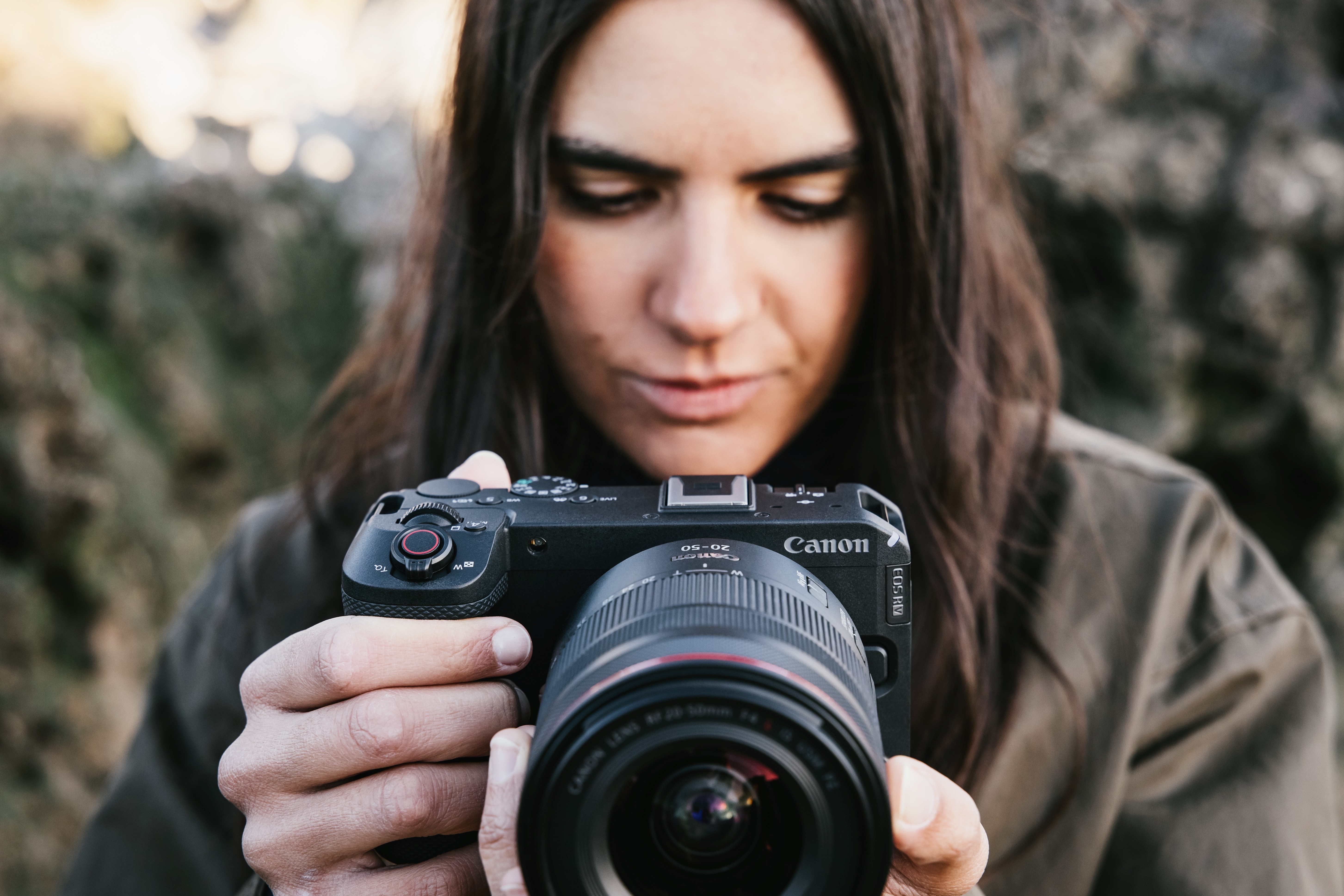
Announced in May 2026, the EOS R6 V is the newest video-first camera in this lineup. It shares the 32.5MP full-frame sensor and DIGIC X processor from the EOS R6 Mark III, but the entire body has been redesigned around a video-first workflow.

It records 7K RAW at up to 60p internally, and Open Gate at 7K 30p gives you the same full sensor capture and multi-platform crop flexibility as the R6 Mark III. Oversampled 4K reaches 60p, and 4K at 120p is available for slow motion. Canon Log 2 and Log 3 are both on board, with 15+ stops of dynamic range in Log 2.

The body itself is built for video. A flat top plate sits comfortably on a gimbal. There's a vertical tripod mount with a rotating UI, a front record button, a power zoom lever for compatible lenses, a tally lamp, and a full-size HDMI Type A port. An active cooling fan enables two or more hours of continuous 7K RAW recording.

The one difference from the R6 Mark III worth knowing: the R6 V has no optical viewfinder. This body is for creators who compose on the screen. For still photographers who need an EVF, the R6 Mark III is the right choice.

Best For: Advanced videographers, cinematic social media creators, live streamers, and any creator who shoots video every day and wants full-frame RAW quality in a body optimised for that workflow from the ground up.

CANON CONTENT CREATION CAMERA COMPARISON

Canon_Content_Creation_Camera_Comparison_Table

If you're starting out and want something ready to shoot the moment it leaves the box, the PowerShot V10 is the answer. If you want more power in a compact body, the PowerShot V1 and G7X Mark III both step up capability without stepping into a full mirrorless system.

When you're ready for interchangeable lenses, the EOS R50 is where that journey begins. For creators whose output is primarily short-form video, the EOS R50 V adds portrait orientation and Cinema EOS-influenced controls at a price that remains accessible.

The EOS R8 is the entry point into full-frame, sharing its sensor with the R6 Mark II in Canon's lightest full-frame body. The R6 Mark II sits above that with IBIS, weather sealing, and professional audio for creators who need reliability day after day. The R6 Mark III adds 7K RAW, Open Gate, a 32.5MP sensor, and more stops of stabilisation for those who need everything in one body.

The EOS R6 V sits alongside the R6 Mark III in terms of video specification, but in a body designed entirely for video production. No EVF, active cooling, a vertical UI, a power zoom lever, and a flat gimbal-friendly profile. Choose the R6 Mark III if you split your time between stills and video. Choose the R6 V if video is the primary output, every day.

Nine cameras. One ecosystem. Whatever stage the work is at right now, there is a Canon camera built around it.
SEE ALSO